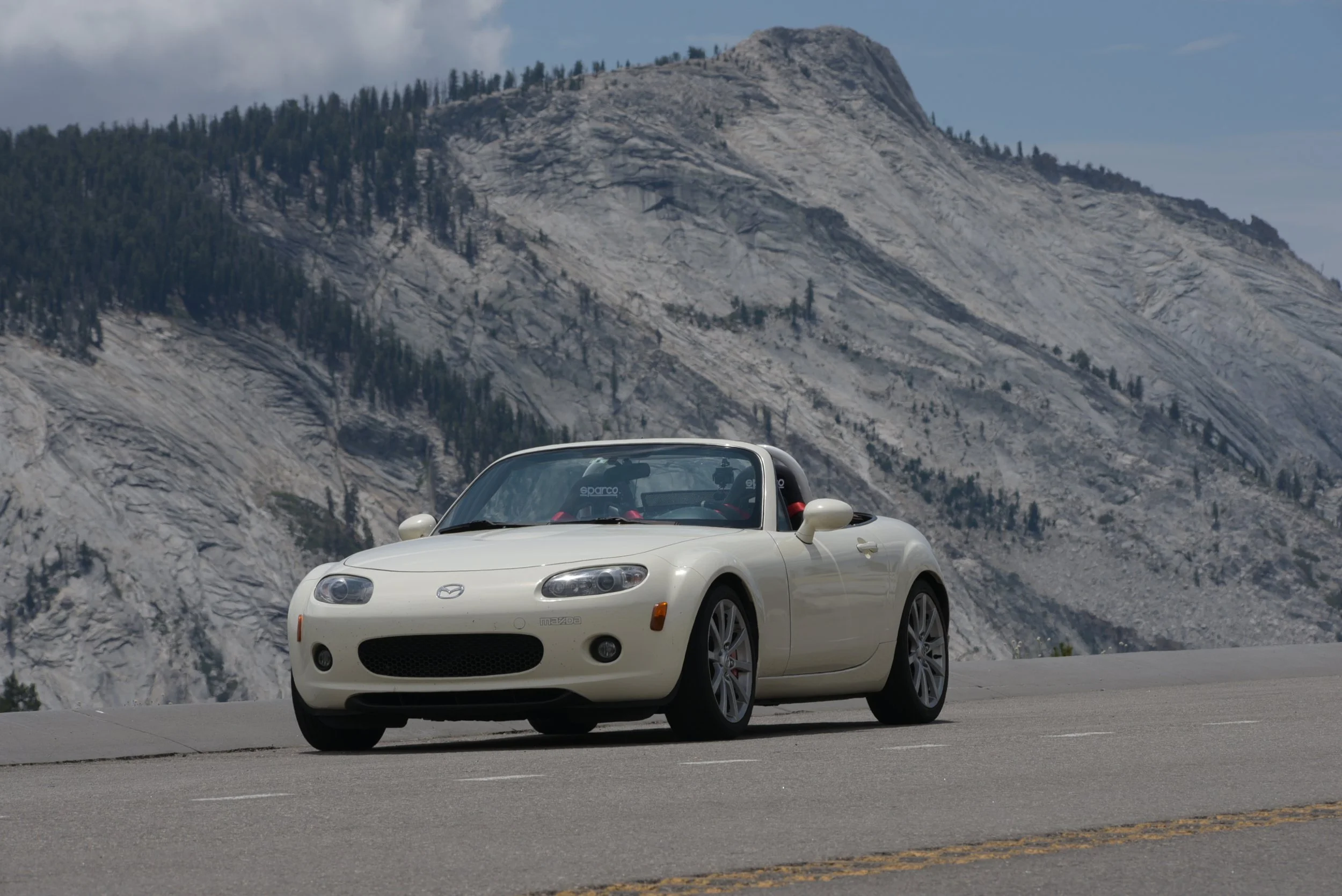
It Happens in an Instant
Imagine you’re driving down the interstate. It’s early afternoon. The road is straight, traffic is light, and the skies are clear. You’re ready to be home. Are you paying attention? Two hands on the wheel? This is the kind of driving we do most often and don’t think twice about, literally. Your subconscious is driving the car while you wonder why all the cars around you are in such boring colors. While you’re trying to remember when you last saw a yellow car that wasn’t a taxi something happens and it only takes an instant. Thud. bang! The rear of the car lurches left, then right, then left again. In less than a second the driver’s side rear tire has split in two and you’re now driving on its folded carcass at 70 miles per hour.
Last Friday it happened to me and my 2006 Mazda Miata 2500 miles into a 3000-mile road trip. In that moment the car demanded 100% of my attention and my subconscious responded before I even knew what happened. Small steering inputs to manage the wayward rear end and steady maintenance throttle to maintain balance front to rear kept the car pointed straight. Before I could even register that I’d lost a tire my muscle memory had saved me.
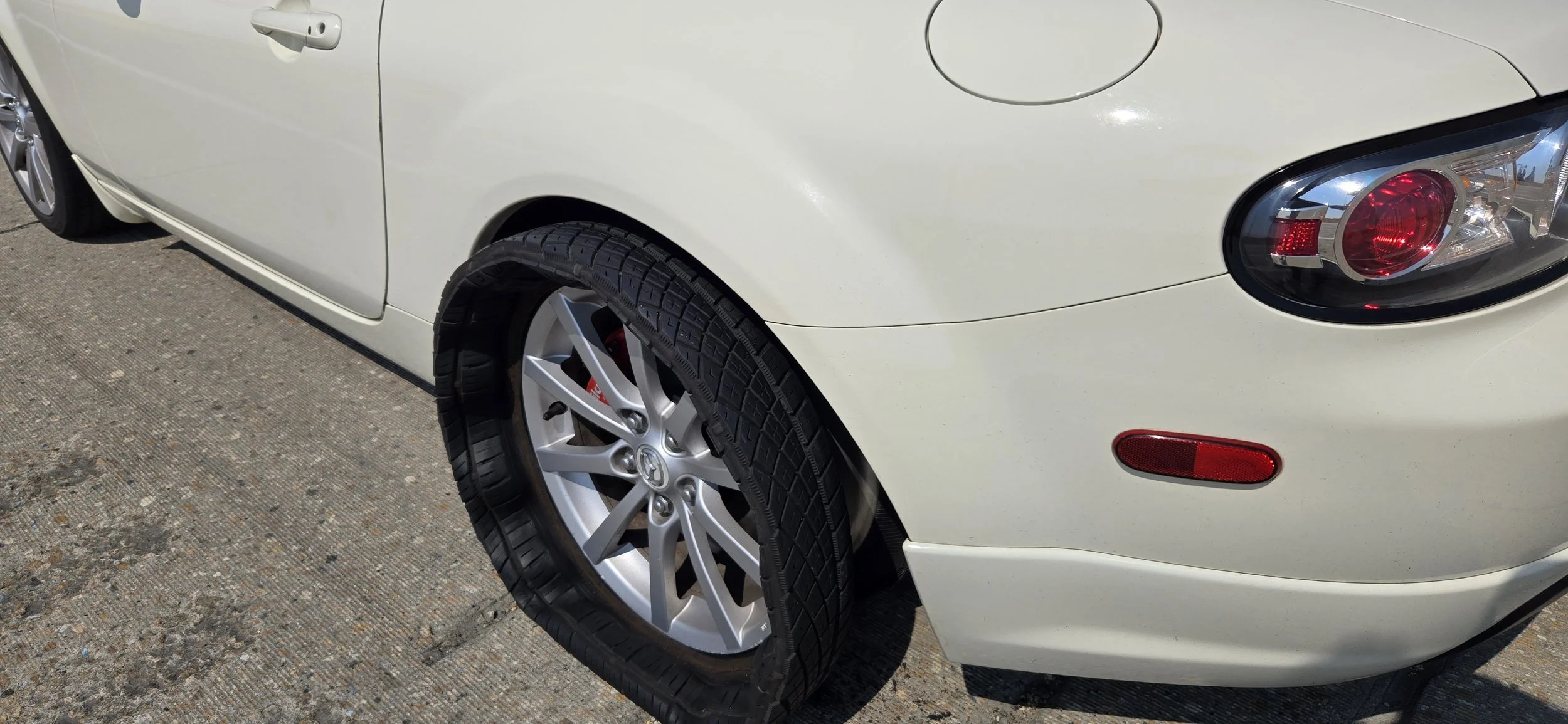
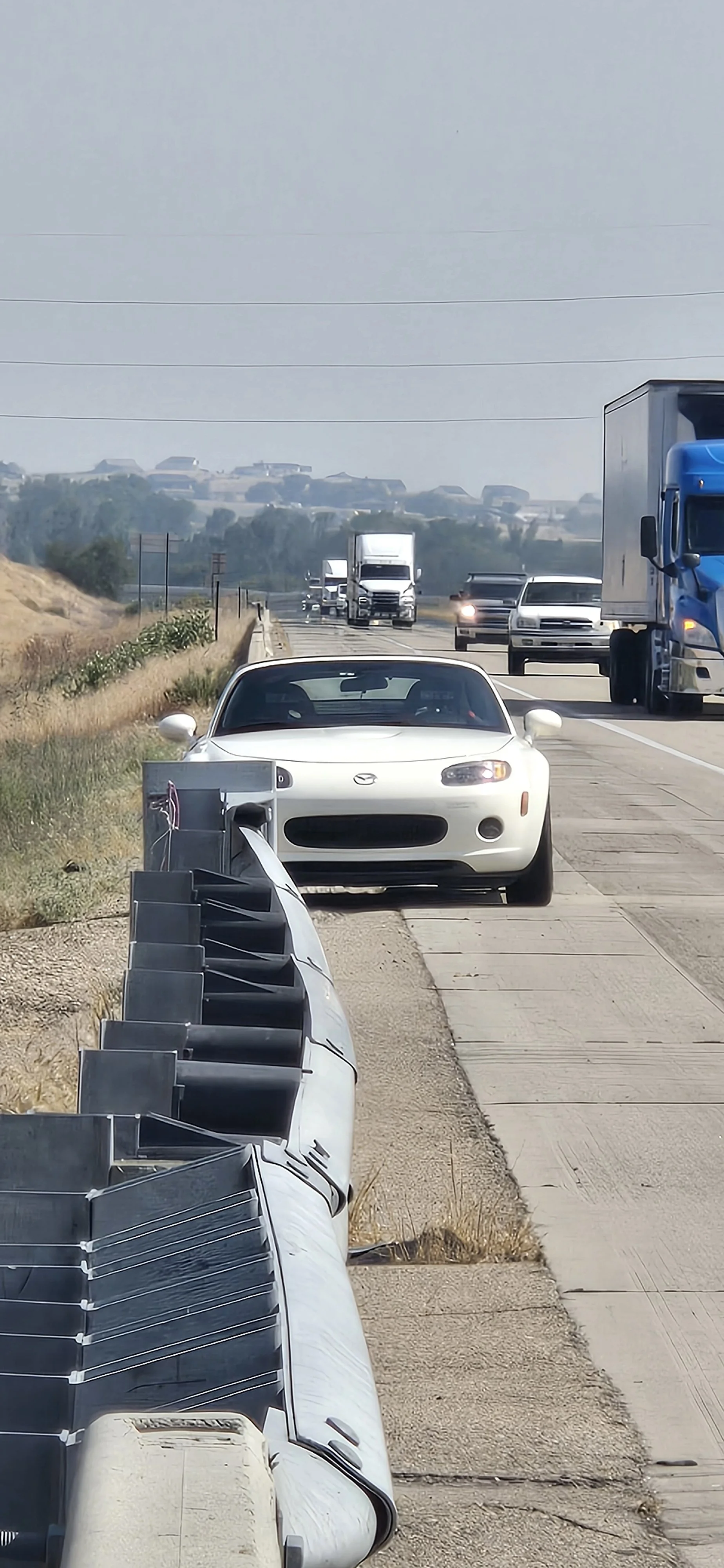
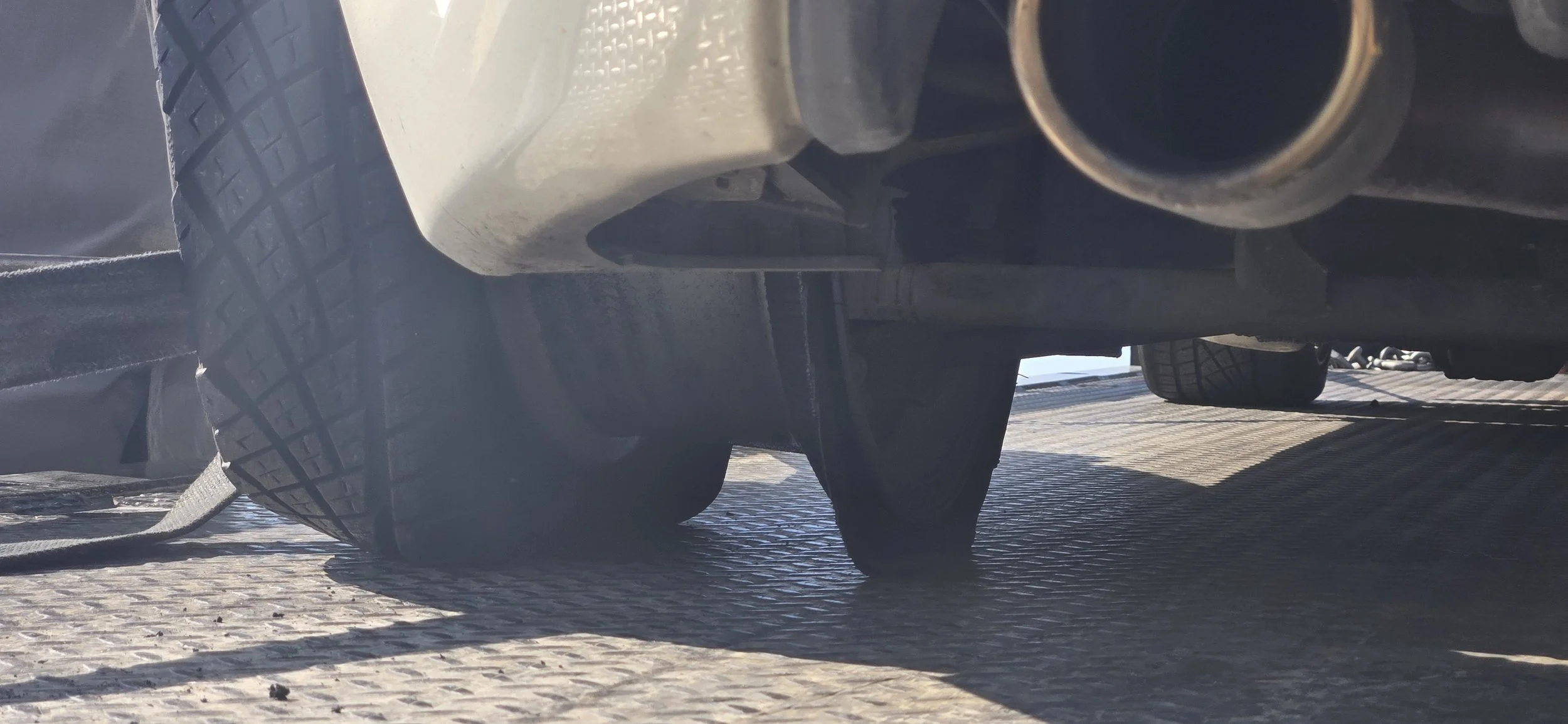
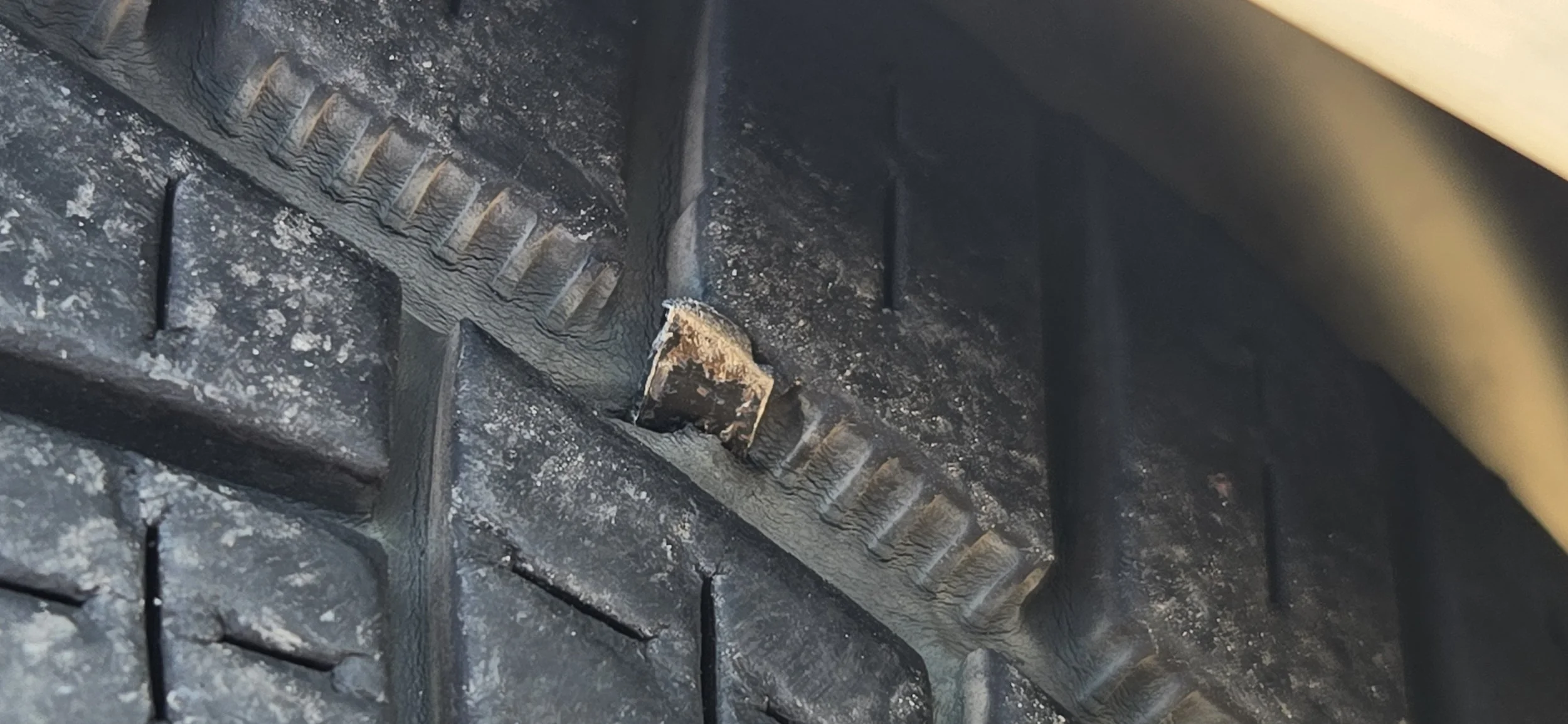
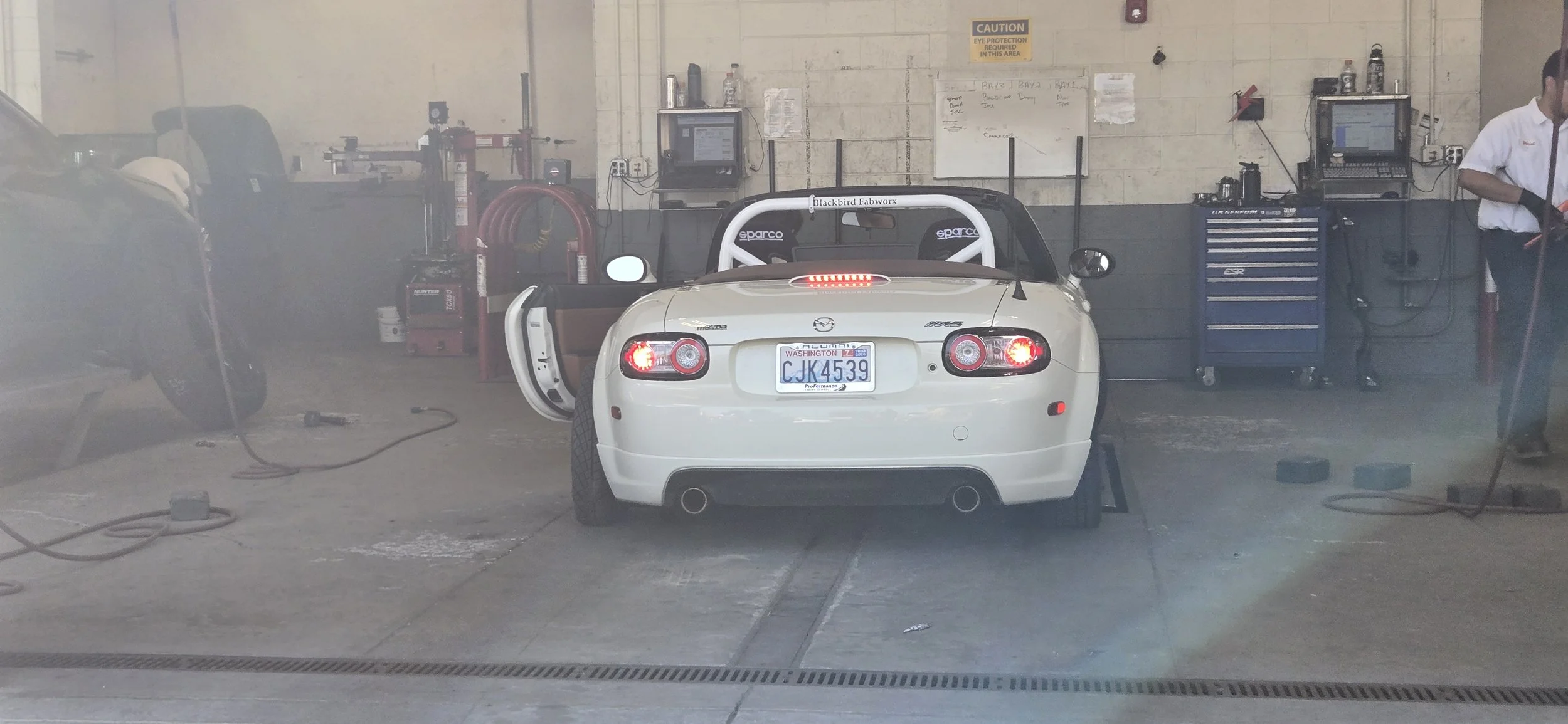
So here I am, thinking about that moment over breakfast in Caldwell, Idaho while I wait for tires to be installed. How does this relate to sim racing when tire blowouts aren’t simulated. It’s all about understanding the fundamentals of vehicle dynamics and practicing car control. With a blowout, we have a dramatic loss of grip on one corner of the car along with what’s effectively catastrophic “damage” to the rear suspension geometry-- the tire is not located where it should be relative to the car causing it to change position in unpredictable ways while in motion. Sim racing creates scenarios like this regularly. You may drop a wheel into the gravel, take suspension damage from a hit on a corner in an endurance race, overheat a tire with wheel spin, etc.
There’s too much happening in a race car to drive it consciously. Correcting a slide before it turns into a spin requires multiple, instant, instinctual inputs from the driver. When racing at the limit, the driver makes these small corrections corner after corner, lap after lap. Your family SUV doesn’t handle like a race car, but both ultimately boil down to four small patches of rubber on the road. Understanding how driver inputs shift weight across the tires, how weight transfer impacts grip, and how grip dictates what the car will do helps develop the seat-of-your-pants feel that drives muscle memory in moments like this.
It’s hard to say with certainty what would’ve happened to me in that moment without my experience in the simulator and on the racetrack. I might’ve been fine or I could have had a big accident. What I can say with certainty is that my experience kept me calm and that’s half the battle. in those first critical seconds. These are the moments where autonomous driver systems expect you to take over. I firmly believe sim racing is skill building for one of the most enjoyable yet potentially dangerous things we do every day. If you’re going to spend time on screens, do it in a sim rig. It might come in handy someday.
And don’t forget all the amazing positive experiences unlocked by driving your own car around this beautiful country of ours.